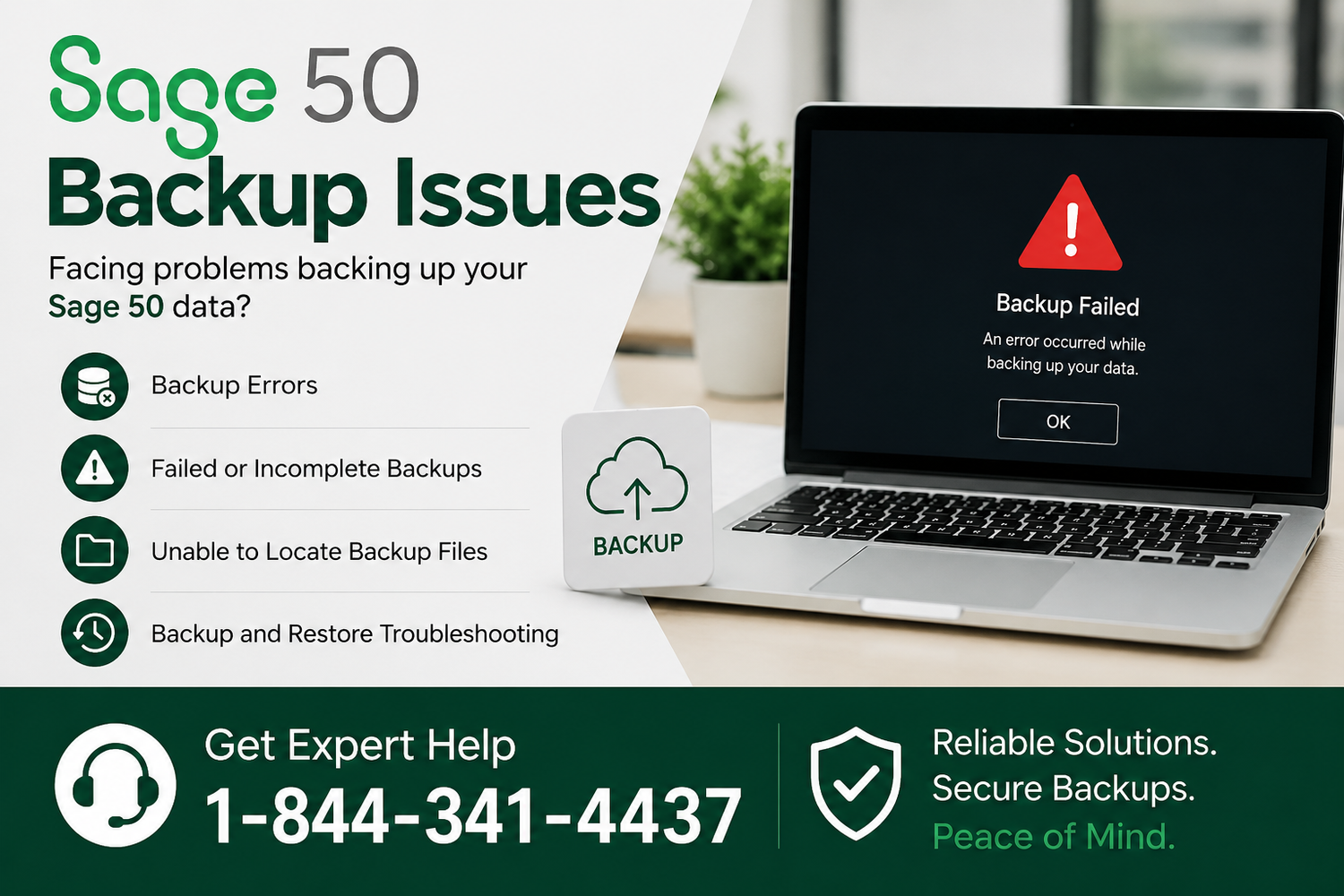
Businesses that rely on Sage 50 understand the importance of secure backups for protecting financial data and company records. However, restoring a backup is not always a seamless process. Many users encounter company file issues that prevent a successful restoration, leading to frustration and potential downtime. If you are searching for solutions on unable to restore sage 50 backup, understanding the root causes and applying the right troubleshooting methods can help you regain access to your data quickly. For immediate assistance, contact our Sage experts at 1-844-341-4437.
When a Sage 50 backup fails to restore, the issue may stem from damaged backup files, incorrect file permissions, incompatible software versions, network interruptions, or corrupted company data. Fortunately, most of these problems can be identified and resolved with a systematic approach.
Resolve Company File Issues Restore Sage 50 Backup
Understanding Why Sage 50 Backup Restoration Fails
Before applying fixes, it is important to understand why the backup restoration process may fail. Sage 50 company files contain critical accounting data, customer information, payroll records, and transaction histories. If any component of the backup file becomes corrupted or inaccessible, Sage may generate errors during restoration.
Common Causes of Backup Restoration Problems
Corrupted backup (.PTB) files
Damaged company data files
Insufficient user permissions
Network connectivity interruptions
Antivirus software blocking file access
Version mismatch between backup and installed Sage 50 software
Insufficient storage space
Incomplete backup creation process
Identifying the exact cause can significantly reduce troubleshooting time and help restore your company file more efficiently.
Verify the Integrity of the Backup File
The first step in resolving restoration issues is verifying whether the backup file itself is intact. If the backup file is damaged, Sage 50 may fail to recognize it during the restoration process.
How to Check Backup File Health
Locate the original backup file.
Confirm that the file extension remains unchanged.
Verify the file size against previous backups.
Copy the backup to a local drive before restoring.
Attempt restoration on another workstation.
If the backup appears corrupted, try using a more recent backup copy. Organizations should always maintain multiple backup generations to avoid data loss scenarios.
Confirm Sage 50 Version Compatibility
A common reason users cannot restore backups is software version incompatibility. Sage 50 backups created in newer versions may not restore correctly in older installations.
Version Compatibility Checklist
Identify the version used to create the backup.
Compare it with your current Sage 50 installation.
Install required updates if necessary.
Upgrade Sage 50 to the appropriate release level.
If you are uncertain about version compatibility, contact Sage support specialists at 1-844-341-4437 for professional guidance.
Check User Permissions and Security Settings
Windows permissions often play a critical role in successful file restoration. Restricted access may prevent Sage from writing restored data to the designated company folder.
Permission Troubleshooting Steps
Log in as a Windows Administrator.
Grant Full Control permissions to Sage folders.
Verify read and write access for all users.
Disable User Account Control temporarily if needed.
After adjusting permissions, restart your system and attempt the restoration process again.
Disable Antivirus and Firewall Interference
Security software can sometimes identify Sage company files as suspicious and block restoration activities. This can interrupt the backup recovery process without generating obvious warnings.
Recommended Security Adjustments
Temporarily disable antivirus scanning.
Pause real-time protection features.
Add Sage installation folders to antivirus exclusions.
Whitelist Sage executable files in firewall settings.
Remember to reactivate security software after completing the restoration successfully.
Restore the Backup to a New Folder
If the existing company folder contains damaged files or conflicting data, restoring the backup into a new directory may resolve the issue.
Steps to Restore to a New Location
Create a new folder on the local drive.
Launch Sage 50 as Administrator.
Select Restore Backup.
Choose the backup file.
Browse to the new folder.
Complete the restoration process.
This method avoids conflicts with existing files and often resolves company file corruption issues.
Repair Company Data Files
Sometimes the company file itself contains structural damage that prevents backup restoration. Sage provides diagnostic and repair utilities that can identify inconsistencies within the database.
Signs of Company File Corruption
Unexpected program crashes
Missing transactions
Data validation errors
Slow system performance
Frequent backup failures
Running data verification and repair tools can correct many underlying issues before attempting another restoration.
Ensure Adequate Disk Space Availability
Insufficient storage space is another overlooked cause of restoration failures. During the restoration process, Sage temporarily creates additional files that require substantial disk capacity.
Storage Requirements Checklist
Verify available hard drive space.
Remove unnecessary files.
Empty temporary folders.
Clear recycle bin contents.
Move large archives to external storage.
Maintaining adequate free space helps ensure smooth backup restoration and overall application performance.
Check Network Environment for Multi-User Systems
Organizations operating Sage 50 in a network environment may encounter restoration issues due to connectivity interruptions or shared folder access restrictions.
Network Troubleshooting Tips
Verify server connectivity.
Check mapped network drives.
Confirm shared folder permissions.
Temporarily restore locally.
Review network security policies.
If restoration succeeds locally but fails over the network, the issue likely resides within network permissions or connectivity settings.
Use a Recent Backup Copy
Older backups are more susceptible to corruption, especially if they have been stored on unstable media. If one backup fails, test alternative backup versions.
Backup Management Best Practices
Maintain daily backup copies.
Store backups in multiple locations.
Use cloud and local storage solutions.
Test backups regularly.
Document backup schedules.
Having multiple recovery points greatly improves the likelihood of successful restoration.
Prevent Future Backup Restoration Problems
While resolving the current issue is important, implementing preventive measures helps avoid future disruptions.
Recommended Preventive Strategies
Schedule automatic backups.
Perform routine data verification.
Keep Sage 50 updated.
Monitor storage utilization.
Train staff on proper backup procedures.
Test restoration processes periodically.
Preventive maintenance reduces operational risk and strengthens business continuity planning.
When Professional Assistance Is Necessary
Some restoration issues involve severe data corruption or complex network configurations that require advanced troubleshooting. If repeated attempts fail, professional intervention may be the safest option.
Situations Requiring Expert Help
Backup file corruption persists
Company data cannot be repaired
Multi-user environment errors continue
Version conversion issues occur
Critical financial records are inaccessible
Experienced Sage technicians can perform detailed diagnostics, recover damaged company files, and ensure that your accounting environment is restored properly. For immediate support, contact our Sage specialists at 1-844-341-4437.
Benefits of Prompt Restoration Troubleshooting
Resolving backup restoration problems quickly helps organizations avoid prolonged downtime, maintain financial reporting accuracy, and preserve customer confidence. Delayed action can increase the risk of data inconsistencies and operational disruptions.
Business Advantages of Successful Recovery
Protection of critical accounting records
Reduced business downtime
Improved regulatory compliance
Enhanced data security
Greater operational continuity
Businesses that implement effective backup management practices are better prepared to handle unexpected data loss situations.
Conclusion
Being unable to restore a Sage 50 backup can be stressful, but most company file issues can be resolved through careful troubleshooting. Whether the problem involves file corruption, version incompatibility, permission restrictions, storage limitations, or network complications, following a structured recovery process can significantly improve success rates. Understanding how to backup sage 50 enables businesses to restore critical accounting data efficiently and minimize operational disruption. If you need expert assistance diagnosing backup errors, repairing damaged files, or restoring company data, call 1-844-341-4437 today for professional Sage 50 support and recovery services.